AI for Science
NASA ODSI
NASA ODSI
Scope, datasets, architecture and acceptance criteria are usually settled in conversations and workshops, and the reasoning stays with people rather than in documents a team can reuse. Two problems are easiest to fix during design, before time and compute go into training.
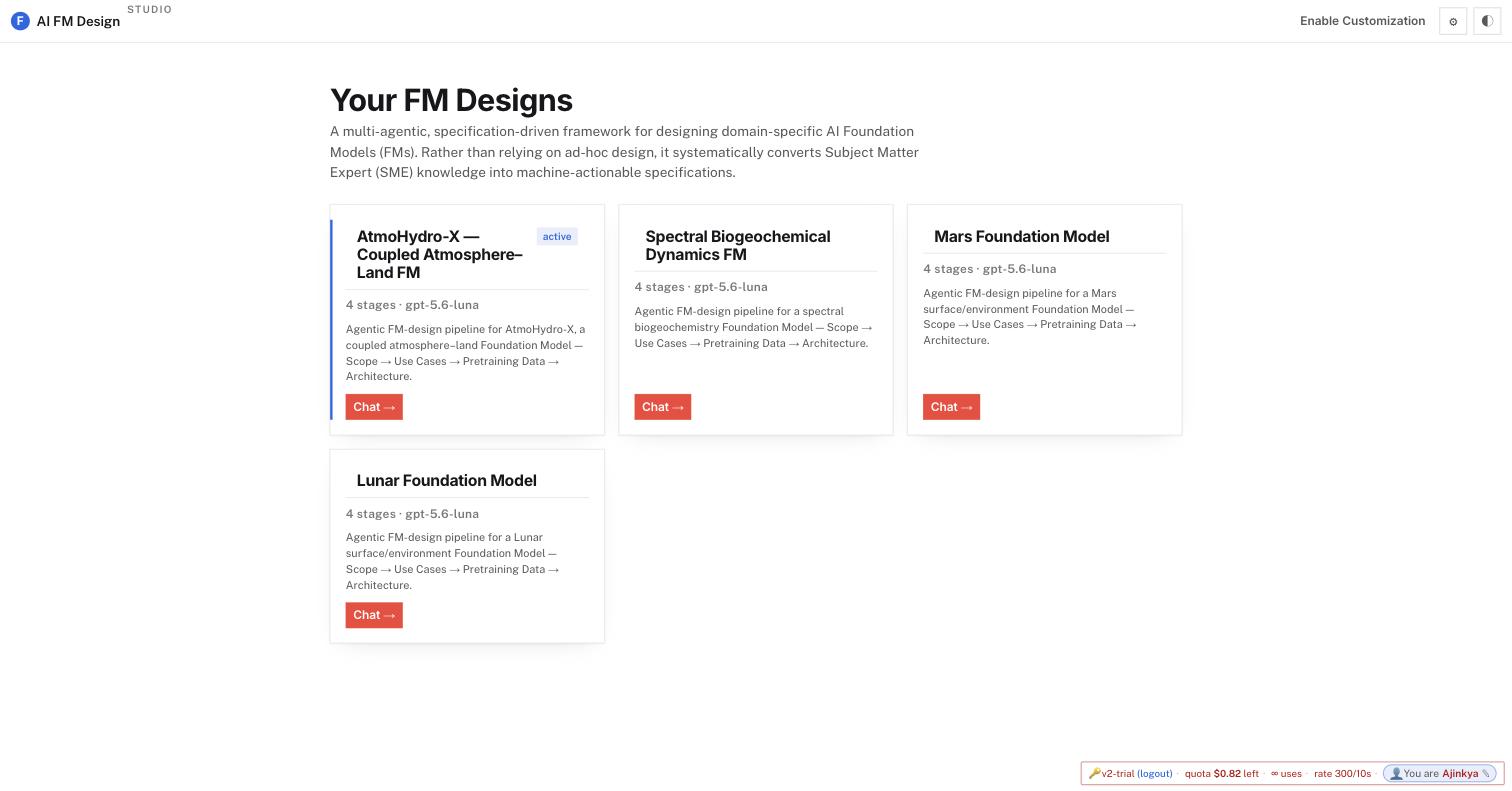
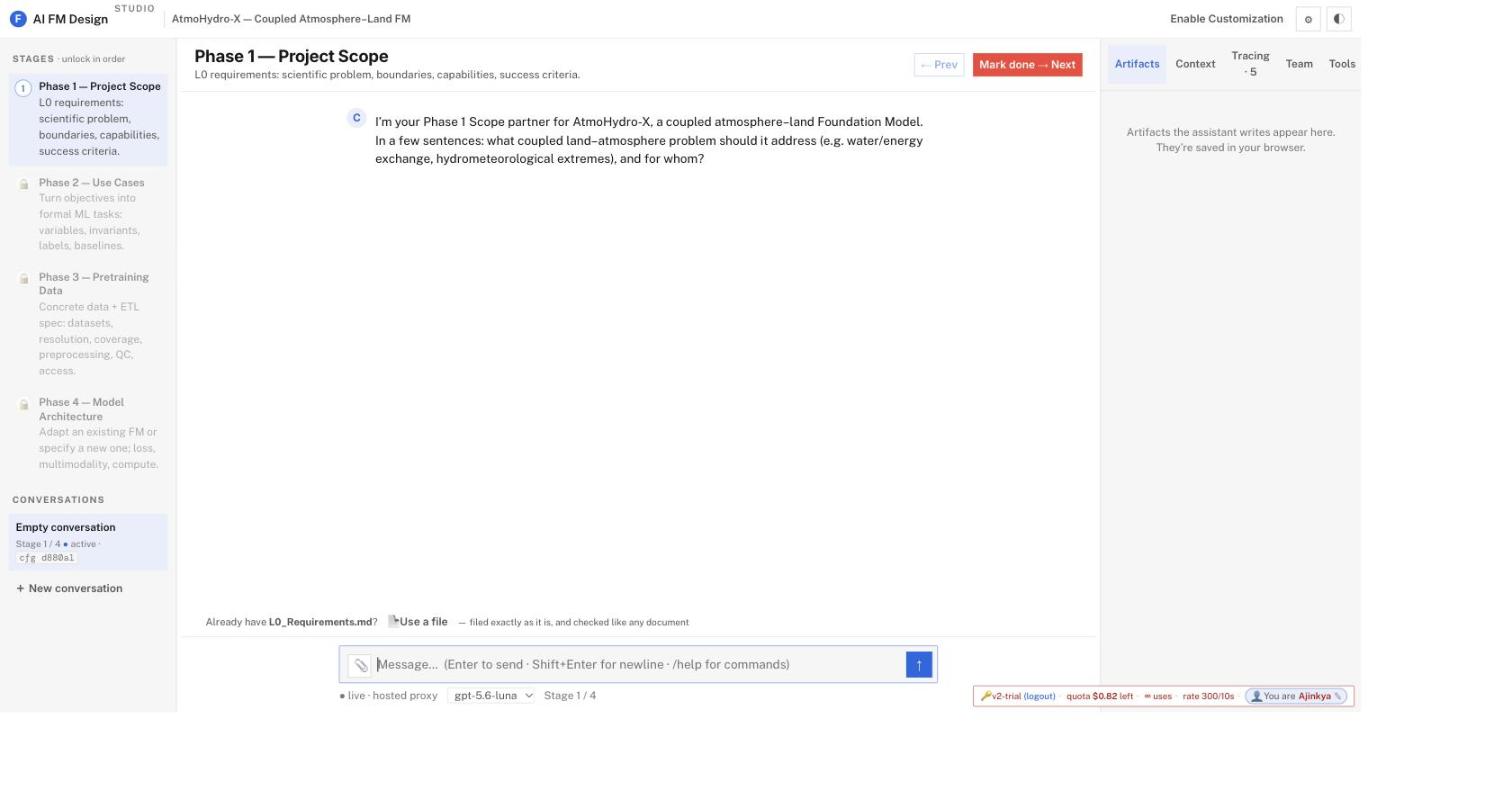
An AI design partner interviews the science team stage by stage—supporting both four-phase domain discovery and NASA ODSI's full eight-stage specification workflow—synthesizing schema-checked, versioned documents that the team reviews and signs off.
Each stage unlocks sequentially with its own goal, reference context (PDFs, CSVs, code), and target schema. Stages can dispatch specialist sub-agents or run in-browser Python and JavaScript tools behind a fail-closed approval gate.
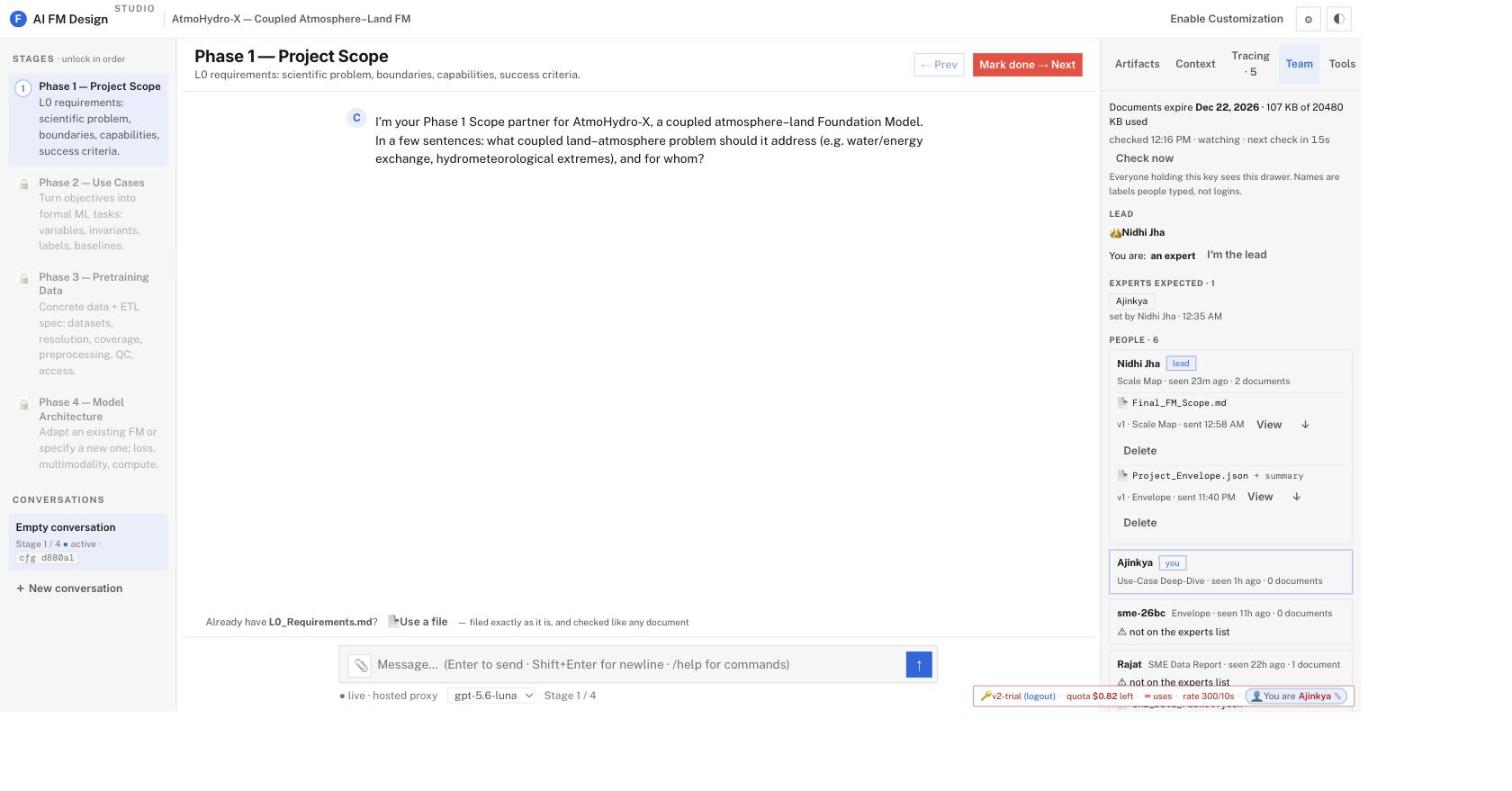
The science lead defines the project scope and invites domain specialists—each contributing their section from their own browser (or uploading existing drafts directly) before the merge stage synthesizes a single cohesive design.
Every stage output—from Project Scope, Scale Map, and SME Data Reports to Architecture & Freeze and Validation—is schema-checked, versioned, and downloadable individually, as a ZIP archive, or as one combined Markdown specification.
The studio runs NASA-IMPACT's agentic FM design process: eight stages and specialist AI agents, with each scientist working on their own laptop and schedule. Hand-offs travel through the team's shared, capped access key. It runs in the browser with nothing to install; one link per team gives access, with a spending cap and an expiry date.
Demonstrated, October 2026. Run end to end on the live system with a lead and three domain scientists, covering forest biomass and canopy height, harmful algal blooms and water quality, and tornado damage detection. It produced an approved scope covering six tasks, with every document passing schema validation.
Open and inspectable: the process, prompts, schemas and checker come from NASA-IMPACT's agentic FM design repository, and the studio is NASA-IMPACT/care-studio-lite, tested by over a thousand automated browser tests.